DIALYSIS
Treatment-water continuity
Qualified facility review, continuity planning, patient communication, and transport coordination.
Critical-facility response fleet
An authorized water advisory reaches everyone at once. One Advisory turns it into different operational work for dialysis, schools, and long-term care—then verifies what actually happened.
An alert is a message. A response is a chain of accountable actions.
One Advisory begins after authorized issuance.Why a fleet
Each institution has different dependencies, authority, evidence, and recovery work. The agents are specialized because the operations are specialized.
Qualified facility review, continuity planning, patient communication, and transport coordination.
Accessible notices and verified supplies must align with official direction.
Clinical dependencies and alternative-water logistics cannot disappear inside a mass alert.
Developer access · managed fleet
Create an incident, send facility updates and named authority decisions, and inspect persisted fleet and managed-runtime receipts through the same governed orchestration as the live command surface.
POST /v1/incidents
Public synthetic operations sandbox
Facilities report by API, Pub/Sub, or these sandbox buttons. Send evidence attaches the fictional sample photo and Gemini verifies it against the claim. Silence is escalated by a durable wake with nobody at the keyboard.
No delegation decision yet. The planner agent records which specialist it chose, why, and anything it refused.
The after-action briefing is drafted by Gemini from the persisted trace when the response closes.
The fleet will surface competing requests without allocating on its own.
Evidence ledger
Each source has a bounded role. None is presented as validation of One Advisory.
Communication, preparation, follow-up, and distinct facility audiences.
Open source ↗CDC INVESTIGATIONHistorical communication, institutional, and alternative-water gaps.
Open source ↗PUBLISHED RESPONSEClinical and support operations affected by loss of potable water.
Open source ↗PRIOR ARTZone, notification, audit, and rescission workflows already exist.
Open source ↗How it works
Every step below is a receipt in the incident record. The fleet moves on its own between them and stops only where a named human is required.
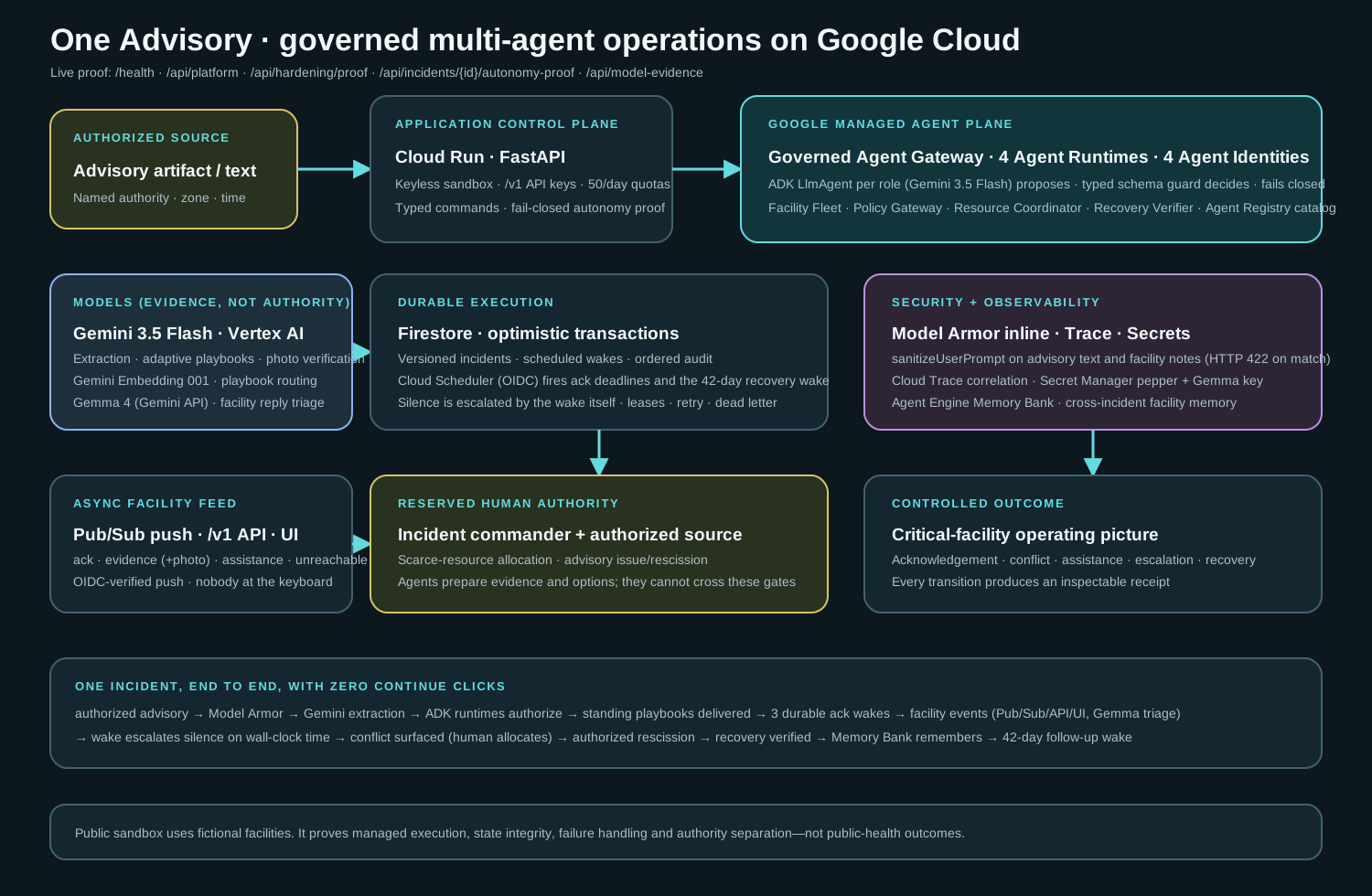
Five specialized agents, five identities
incident-plannerDecides which specialist the fleet delegates to next, in what order, and when to wait instead. Executes nothing itself.facility-fleetActivates the registered fleet against an authorized advisory.policy-gatewayRejects actions outside registered authority and delivers only pre-authorized playbooks.resource-coordinatorSurfaces scarce-resource conflicts and escalates silence. Allocates nothing.recovery-verifierVerifies facility recovery, and only when an authorized rescission arrives.Each runs on its own Vertex AI Agent Engine runtime with its own Agent Identity, behind one governed Agent Gateway, catalogued in Agent Registry. A plan may only name registered role and command pairs; compliance steps are enforced by the registry, and a planner outage falls back to the registered sequence.
Catalogued, and bounded to one region
Running on Google Cloud
Why it could matter
Utilities and emergency managers already do the hard part: define the zone, identify critical customers, send the warning, record the approval, publish the rescission. What no system owns is whether each facility actually completed the different work the warning required.
Honest by design: the measurement plan and its acceptance thresholds are published in the impact evidence scorecard, and the validation protocol for a real tabletop is in the external validation protocol.
Prove it yourself
Each card calls a public endpoint on this deployment when the page loads. If a plane is down, the card says so instead of showing a claim.
/api/proof
Failure recovery…Checking live./api/hardening/proof
Delegation ceiling…Checking live./api/planner/proof
Managed plane…Checking live./api/platform
Also public: the autonomy receipt derived from each persisted trace, the live model contract, the sandbox boundary, and the OpenAPI contract.